The fabric makes 80% of the image. The projector does the rest.
The same projector can deliver a mediocre image or a reference image depending on the fabric that receives it. Gain, uniformity, color accuracy, acoustic transparency: every LumeO fabric is chosen for a use case, not a price point.
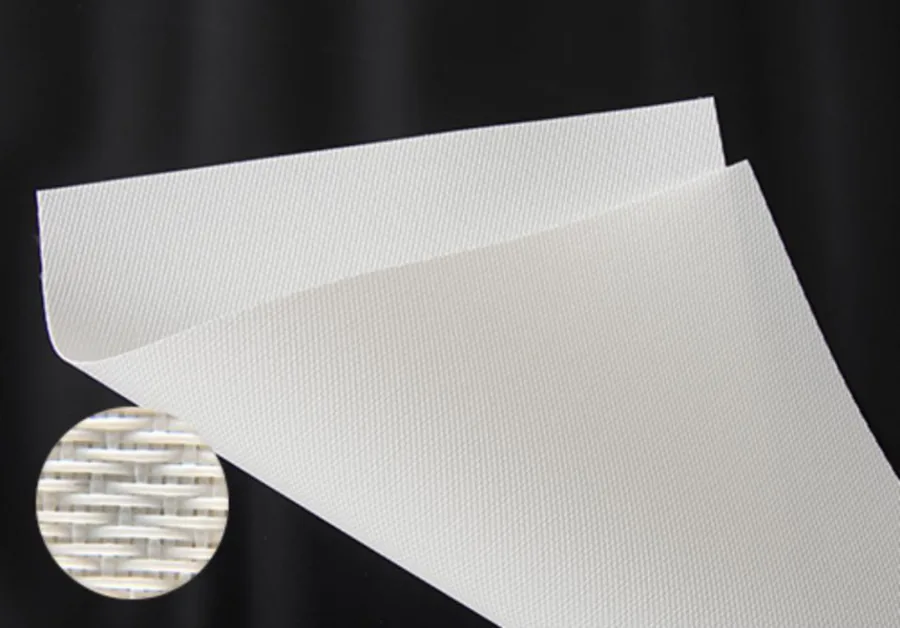
Woven acoustic Woven fiber
Gain 1.0 · 140° · 76,000 openings/ft²
A high-density woven fiber surface with more than 76,000 micro-openings per square foot. Sound passes through cleanly, and the woven structure suppresses the moiré (interference fringes) that a projector can reveal on a perforated surface. It lets you place the front speakers directly behind the image, as in a commercial cinema.
Speakers behind the screen · Cinema Sonic Edge
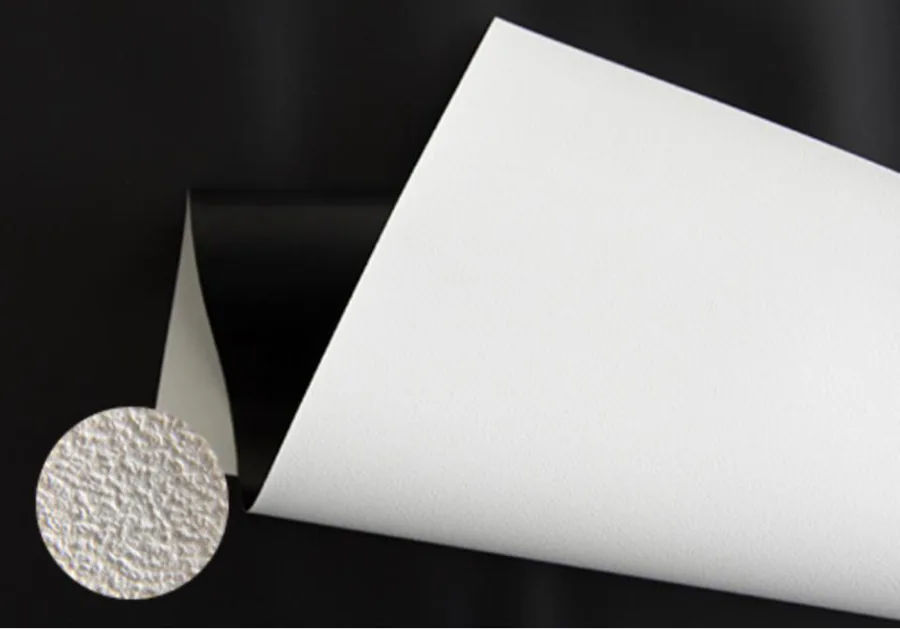
Flexible white Gain 1.0
Gain 1.0 · 160° · 0.32 mm
A flexible PVC composite surface with a fine diffusing texture that spreads incident light across a wide 160° viewing angle. Light, compact and easy to transport, it is the versatile reference for retractable and fixed-frame screens in most rooms.
Retractable & fixed frame · Cinema Nova, Edge, Lift
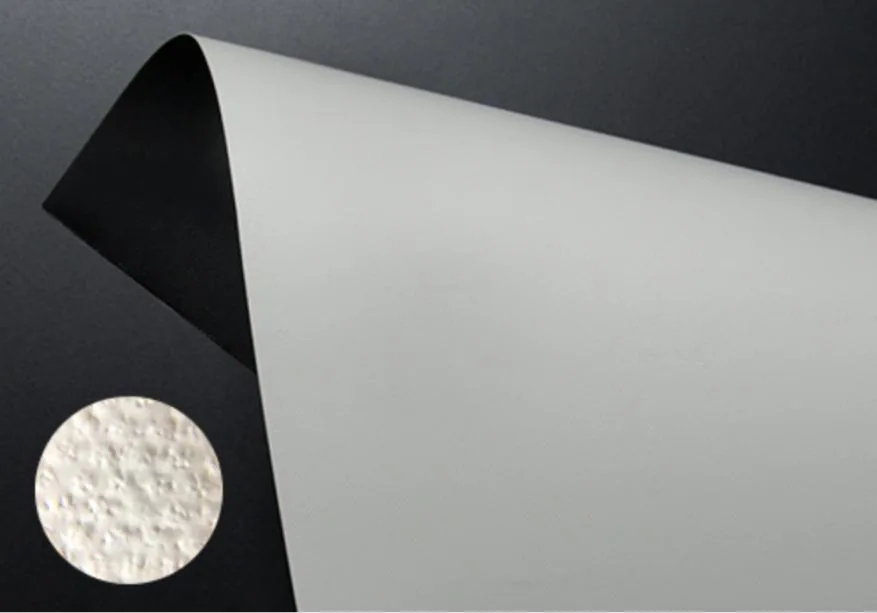
Matte white glass fiber Self-flattening
Gain 1.0 · 160° · 0.4 mm
A glass-fiber surface that stays naturally flat without tensioning: it does not ripple and does not deform over time. Strong resistance to temperature swings and humidity, neutral color. That mechanical stability makes it the surface of choice for motorized and in-ceiling screens, which roll up and down hundreds of times. Also available in a grey, contrast-enhancing version.
Motorized & in-ceiling screens · Cinema Nova
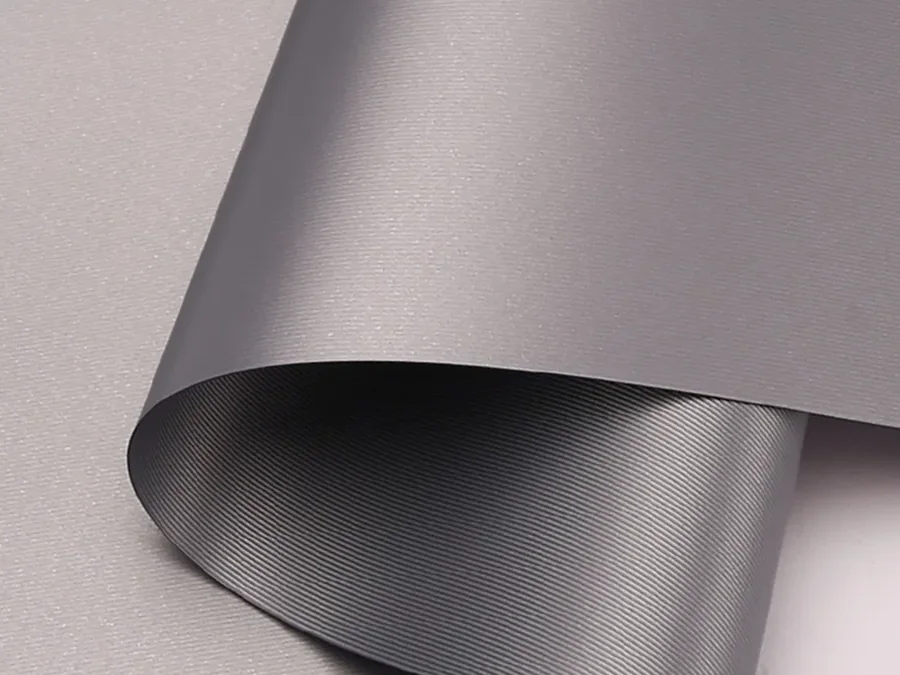
Contrast-enhancing grey Gain 0.8
Gain 0.8 · 160° · lowered black level
A grey-based surface that attenuates light uniformly — the room's as well as the projector's. The black level drops, perceived contrast rises. It is the answer to light bouncing off pale walls, ceilings or floors, where an ALR would be oversized. Unlike ALR, it does not sort light by its angle of incidence: it therefore assumes a projector with brightness to spare.
Pale walls, bright projector · Cinema Vault, Cinema Nova S+

UST ALR lenticular 93% light rejection
Gain 0.8 · 160° · UST-optimized
A lenticular (black-grating) structure whose horizontal prisms absorb overhead and side ambient light — up to 93% rejection — while reflecting the projected light back to the viewer. Optimized for ultra-short-throw projectors, it keeps contrast and color uniform across a 160° angle, even with the lights on.
Ultra-short-throw, bright room · Cinema Lift UST
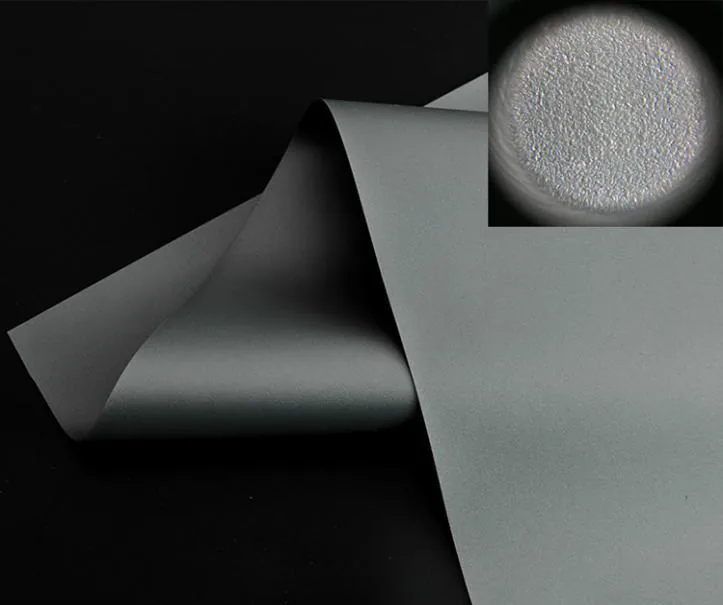
Long-throw ALR Light rejection
Gain 0.8 · 160° · 0.32 mm
An ambient-light-rejecting surface for standard long-throw projectors: it filters and absorbs stray light to preserve contrast, shading and color saturation in a partially lit living room — farewell to strict dark-room conditions — while keeping a wide viewing angle.
Bright living room, daytime viewing · Cinema Nova
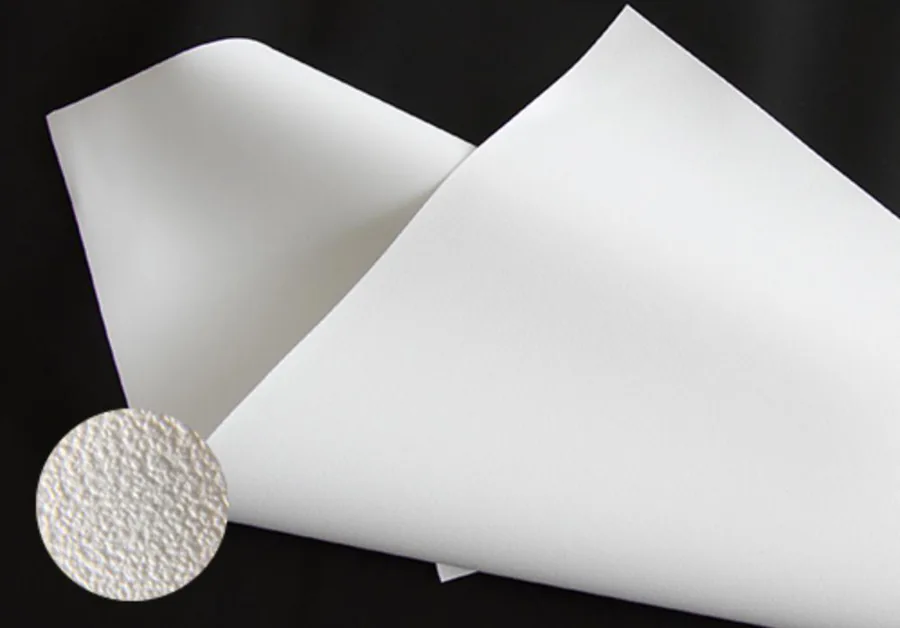
Dual-sided white 4K / 8K
Gain 1.1 · 160° · dual projection
A double-sided surface that can be projected onto from either side, for rooms that present content in two directions — conference rooms, multipurpose halls, exhibition spaces. High brightness and faithful color reproduction, ready for 4K and 8K sources.
Two-way projection, pro venues · Nova Pro